
Posts by Sam Bowden

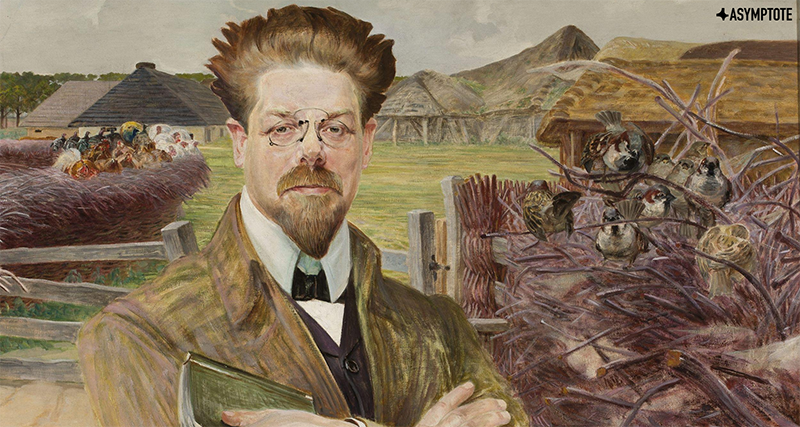
Władysław Reymont: Poland’s Chronicler of the Profane

Reymont’s work had become so particularly Polish . . . that it once again became universal.

These days, the reading world eagerly anticipates the Swedish Academy’s annual awarding of the Nobel Prize for Literature, placing bets and preparing stacks of shiny gold stickers, ready to be stamped on newly reprinted books. Yet the Prize, now over one hundred years old, has had many of its laureates fall into obscurity, either due to a seeming lack of contemporary resonance, or the changing priorities of the Academy itself. In this essay, we look towards the works of one such writer, whose pivotal titles perhaps deserve a revisit for their stylistic commitment, persistent human themes, and documentation of the times.

Władysław Reymont, Poland’s second Nobel Laureate, was born to the family Rejment in 1867; in 1892, when he was first published, he insisted on changing his name’s spelling (if not its pronunciation), in part, as Polish academic Kazimierz Wyka speculated, because of its closeness to the verb rejmentować: “to cuss” in certain Polish dialects. For some authors, this would be a humorous footnote in their biographies, but for Reymont, it proves an apt metaphor for his oeuvre. His major works—including, most famously, Ziema obiecana (The Promised Land) and Chłopi (The Peasants)—are beautiful and distinct depictions of nasty, earthy lives. Like curses disguised with respelling, they reconfigure their surprising, sometimes shocking base material, deriving elegant representations from the inelegant. Despite being drawn, like so many Polish intellectuals of his era, towards a vision of Polish nationhood that literature had to help create, Reymont opted to render Poland as a grimy, smoky, bloody place—but where he becomes intriguing, and what perhaps most compelled the Nobel Committee to award him the 1924 Prize in Literature, is when that focus on the bodily and the brutish becomes celebratory and even liberatory, for both its subjects and their nation.

Reymont was born into a Poland that was, by then, absent for decades. By 1867, the nation had been partitioned between Austria, Prussia, and Russia for nearly seventy years. Seemingly mirroring this fragmentary state, Reymont was a shoemaker, then an actor, then a linesman on the Warsaw-Vienna Railway, then a prospective candidate at a monastery, before he made his way to writing. Nonetheless (or perhaps because of his aimless decades), Reymont had established himself as a major figure in the Młoda Polska (Young Poland) movement by the end of the nineteenth century, primarily through his short fiction and travel narratives. The Young Poles—working across literature, music, and art—were neo-romantics, skeptics of the old world order that seemed to edge closer to collapse with each toppled European monarchy or imperial clash, and Reymont’s best-known works are no different. In Ziema obiecana, modernity is simply decried; in Chłopi, Reymont seeks a solution by turning inwards to Poland’s rural culture, timelessly isolated from modern concerns. In both works, we meet plenty of violence, gory detail, and literary profanity, but Reymont’s choice of subject for the latter novel reframes the grit in terms that the Nobel Committee registered as transcendental and universalist. READ MORE…
Ukraine’s Linguistic Front: A Review of Ordinary People Don’t Carry Machine Guns by Artem Chapeye

By focusing on the ambiguity of his new life at war, Chapeye resists Russia’s invasion on a psychological level.

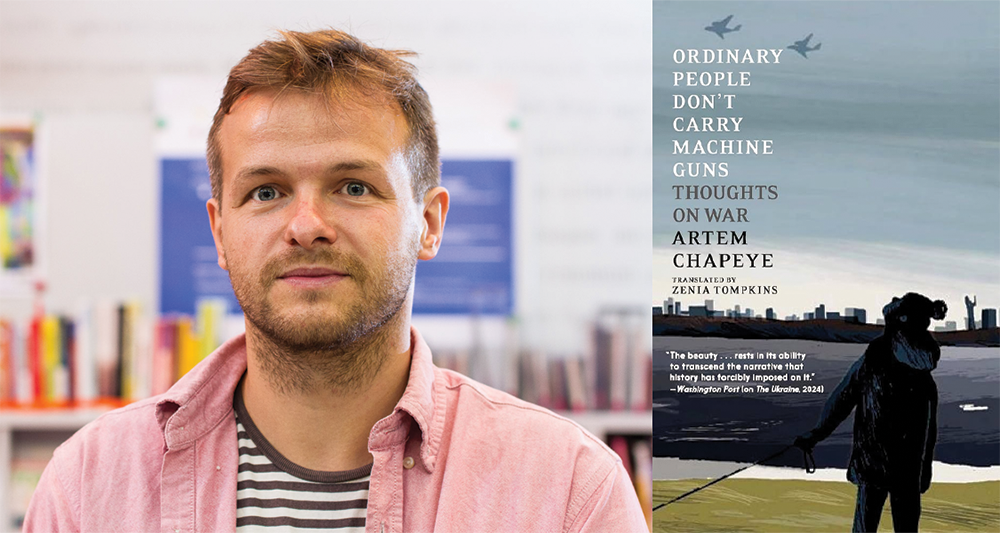
Ordinary People Don’t Carry Machine Guns by Artem Chapeye, translated from the Ukrainian by Zenia Tompkins, Penguin Random House, April 2025

Since Russia’s full-scale invasion of their country, Ukrainian writers have brought the resistance into their language. Some who once worked in Russian have switched to Ukrainian; others stopped capitalizing the invader’s name, rendering it as puny russia (росія). This is about reducing Russia, ejecting it from a language it has tried to claim as its own, as if in anticipation of Moscow’s physical expulsion. In his latest book—equal parts memoir, treatise, and document of the first three years of the invasion—Artem Chapeye rejects not only Russia, but the cruel logic of war. Throughout Ordinary People Don’t Carry Machine Guns, Russia—and the grief, fear, uncertainty, guilt, and shame its war brought upon Ukrainians—is referred to as “Gloom.” It is Gloom that encroaches upon Ukraine, Gloom against which Chapeye, who joined the military shortly after Russia invaded, takes up arms alongside his countrymen. Gloom is both Russia’s literal tanks and missiles and the psychological conditions Russia’s invasion forces upon Chapeye—at once the monster and the terror it inspires. Yet Ordinary People does more than chase Russia from its language. Chapeye, rendered in affable English by Zenia Tompkins, resists the affect of war itself. Through Tompkins’s frank translation, which favors a colloquial, musing style, Chapeye remains irrepressibly human as Gloom tries to change him. The result is a surprisingly warm and compelling text that insists on rising above Russia’s war, even as it acknowledges the urgency of the real-world struggle to end it. READ MORE…

Life is Like a Box of Golgappas: On Transcultural Translations

“Universality,” for interpretations of US products around the world, may also mean “unavoidable.”

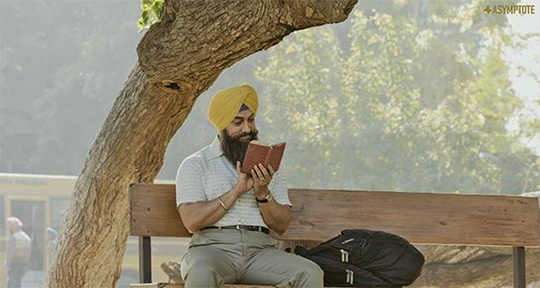
Translators tend to like puzzles. Problem solving between languages is the definition of the trade, but what of the deeper, more invisible quandaries of culture and context? In this essay, Sam Bowden takes a look at two works that seem inextricable from the cultures of their origin—Lin-Manuel Miranda’s musical Hamilton and Rober Zemeckis’s 1994 dramedy, Forrest Gump—as well as their respective international adaptations into German and Hindi, to investigate the various methodologies and techniques utilized in fitting these quintessentially US productions for new audiences.

One of the translator’s greatest challenges lies at a level deeper than language: instead, it is rooted in the countless cultural and historical contexts which consciously and unconsciously inform a given work. Since language is inextricable from the culture and history within which it is made, translational processes often prove more complex than simply replacing words, rhymes, characters, and themes. Source-cultural conditions and consciousnesses can shape a text in structurally embedded ways that go far beyond its linguistic surface.

Speaking from the United States, I am well aware of the extent to which my country’s culture and history—one could even call it mythology—have deeply shaped the literary narratives it produces and exports on a massive scale. When American stories circulate through the world-system, the result can be curious to study: these are narratives visibly shaped by a suddenly-invisible context. How do translators maneuver around this? READ MORE…